Article: Low Battery Range
Batteries naturally reduce in capacity over their lifespan from recharge cycles and other user variables. Let's go through what you can do to get the most out of your battery and understand the variables that consume more battery % while riding.
Battery range is highly variable for the environment and how it is ridden:
With example Rover Gen6 with brand new 20AH battery
1. Max Power: Speed limit 50kmh, motor 1000W, throttle unlocked, PAS 6, minimal pedalling, flat ground, 80kg rider, 25PSI tyre pressure = est. 25km range ~
2. Conservative Riding: Speed limit 25kmh, 250-500W, throttle disabled, PAS 5, medium pedal force, flat ground, 80kg rider, 25PSI tyre pressure = est. 50km range ~
3. Max Achievable Range, Controlled Test: Speed limit 25kmh, ECO 250W, throttle disabled, PAS 1, consistent 100W pedal force, flat ground, 80kg rider, 25PSI tyre pressure = 100km range
The advertised 100km range is a mathematical target achieved under controlled testing conditions. Standardized testing provides the e-bike industry with a consistent method to benchmark battery capacity. Real-world range will vary. Heavy throttle usage, inconsistent pedaling, and lighter rider effort significantly increase battery drain by requiring the motor to carry more of the load. The stated 100km range assumes a continuous rider input of 100W of consistent pedal power.
Load Testing Batteries
If you are needing a battery load test to get the capacity read out results on your battery, Dirodi offers this for warranty or non-warranty requests. Select ebike retailers also have load testers.
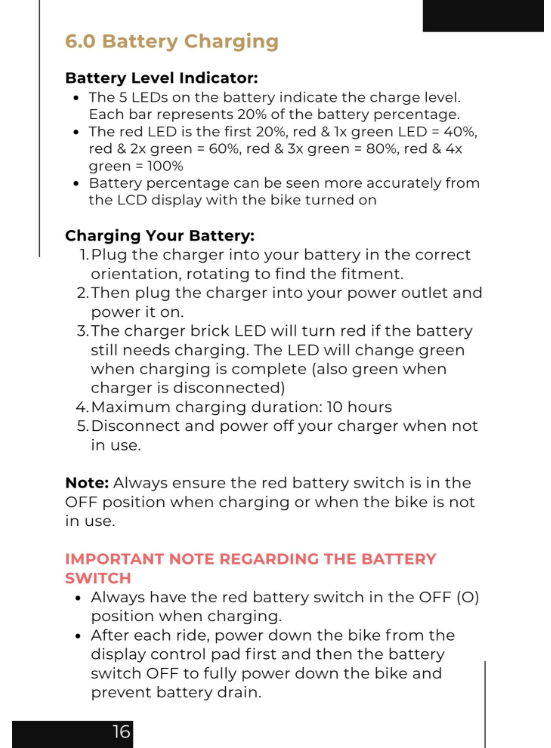
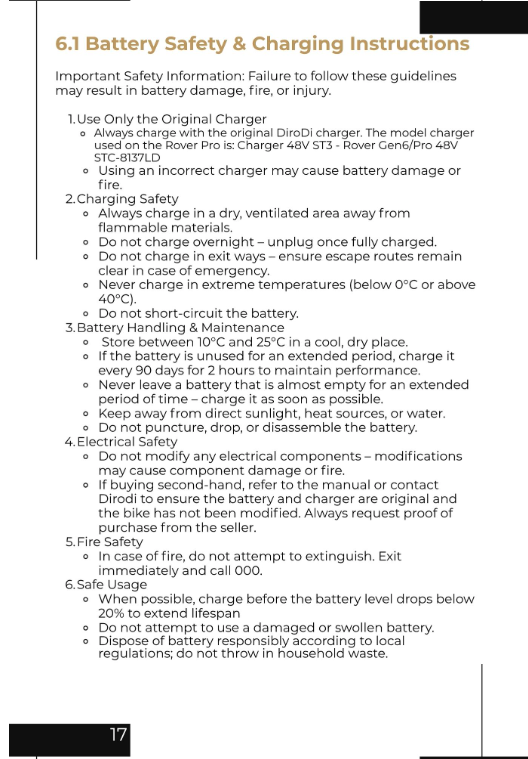
Charging best practices: Refer to bike manual charging instructions, example below.