Our Melbourne team will help you choose the right electric bike for your ride, range and budget.
(03) 4428 0000Genuine DiroDi parts for every model and generation. Our Melbourne team will match the right part to your bike.
(03) 4428 0000
Fat tyre ebikes are gaining exceptional popularity in Australia, becoming a common sight in many places. If you live near the beach, it's not unusual to see dozens of fat ebikes cruising along the shoreline on weekends. But what's the fuss all about when it comes to these fat bikes?
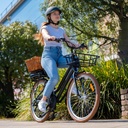
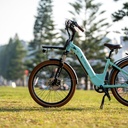
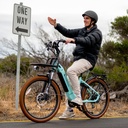
Fat Tyre Electric Bikes are easier to ride on grass, sand, or mountain trails. The wider tyres provide more grip and offer a suspension system that filters out vibrations. DiroDi offers a range of Fat e-bikes under the “Rover” model. Our fat tire ebikes have a retro and vintage look while incorporating state-of-the-art electric mobility technologies.
Fat tyre e-bikes are becoming more popular. The concept of fat bikes is very similar to the concept of an "SUV" in the car industry. Instead of buying two separate cars (a sedan and an off-road vehicle), people prefer to purchase a single hybrid car (an SUV), which can be used for both on-road and off-road purposes. Fat tyre bikes provide the same flexibility. You have only one bike, which you can, for instance, use to commute to work during business days and go to the beach or camping on weekends.
Fat tyre e-bikes offer several distinct benefits that make them appealing to a wide range of cyclists and outdoor enthusiasts. Here are some of the key advantages:
In conclusion, fat tyre e-bikes are not just about their distinctive looks; they offer practical benefits that cater to both recreational cyclists and serious outdoor enthusiasts. Whether you're seeking improved traction on rough terrain, a smoother ride on bumpy paths, or simply more fun exploring new places, a fat tyre e-bike could be the perfect choice for your cycling adventures.
Fat tyre bikes (also called fat tyre electric bikes, fat e-bikes, or snow bikes) are ebikes with wider tyres (approx. 3.8 inches/ 97 mm) and wider rims (approx. 2.16 inches/ 55 mm). They are specifically designed for rides on soft ground such as sand, snow, grass, or rough terrains. What distinguishes them from normal bikes is a smoother ride over uneven tracks due to the wider tyres and the ability to maintain lower tyre pressure.
The primary focus of fat tyre design is the low tyre pressure, which offers a more effective and steady grip on various tracks in nearly all weather conditions. Wider tyres and low tyre pressure result in more tyre tread surface touching the ground. This means the bike doesn't sink in soft mud and doesn't slip on wet or slippery tracks. Additionally, low tyre pressure helps reduce the shock from obstacles like rocks or logs.
While it's commonly believed that the combination of lower tyre pressure and wider tyre size results in more rolling resistance (requiring more energy to maintain the same speed as a bike with thinner tyres), some studies suggest that in real-world conditions, fat tyre bikes might be faster. This is because thin tyres tend to bounce and react more to road imperfections. In electric bikes, the motor's assistance can easily compensate for slight differences in rolling resistance.
Yes, on average, a fat tyre is heavier by 200 to 400 grams (400 to 800 grams for both tyres). However, in electric bikes, this extra weight doesn't significantly affect the ride or range.
Generally, yes. While the tyre type isn't the only factor determining a bike's maximum load, fat tyre bikes can typically carry 20 to 30 percent more weight than standard road bikes. They often come with wider rims, stronger forks, and frames. A heavier rider would likely feel safer on a bike with a steadier grip and more tyre surface in contact with the ground.
Fat tyres typically cost about twice as much as standard ones. However, given their longevity (2500-5000 km), this price difference isn't a significant concern
Generally, fat tyres are more puncture-resistant due to their stronger and thicker structure.
Despite some drawbacks, like being slightly heavier and having more rolling resistance on smooth surfaces, the benefits of fat tyre bikes often outweigh the negatives. In electric fat tyre bikes, the motor compensates for these drawbacks. If you only plan to ride on smooth surfaces and pavements, fat tyre bikes might not be the best choice. However, if you ride on various terrains, a fat tyre bike is a great option. It's akin to buying an SUV for both daily commutes and weekend adventures.
They're popular because they can handle diverse terrains, including beaches, trails, and urban landscapes. They offer comfort and stability, making them suitable for various riding conditions.
Yes, fat tyre e-bikes are increasingly used for commuting due to their comfortable ride and ability to handle different road surfaces. They are especially useful in areas with variable weather conditions.
No, fat tyre e-bikes that comply with Australian e-bike regulations (e.g., pedal-assist up to 25 km/h) do not require a license or registration for use on public roads or trails.
Yes, fat tyre e-bikes are suitable for commuting in urban areas where they can handle potholes, curbs, and other obstacles with ease, offering a comfortable and efficient mode of transportation.
Recommended accessories for fat tyre e-bikes include mudguards, racks or panniers for carrying gear, bike lights for visibility, and puncture-resistant tubes or tubeless tyres for added reliability on rough terrain.