
Before choosing an electric scooter, check whether the exact device can be used on your planned route. Rules differ between states, and being sold in Australia does not establish public-road permission.
Then compare lifting weight, folded size, brakes, battery and servicing. This guide explains the practical checks before buying.
Why are electric scooters popular?
Affordability: Electric scooters are more affordable than gas-powered scooters or motorcycles, especially if you are just going to use them to cover a short distance, like going to work and back. Additionally, you save on petrol costs since electric scooters are rechargeable.
Portability: folding size and weight vary. Try folding and carrying the actual scooter, and measure its storage space. A folding mechanism does not make a heavy scooter easy to lift.
Controls and rider requirements: practise starting, braking and turning in a suitable place. Check local age, licensing and supervision rules, including Queensland's 2026 changes.
Environmental friendliness: Electric scooters produce zero emissions and contribute to reducing pollution, making them eco-friendly compared to other modes of transportation.
Fun to ride: Aside from practical use, electric scooters offer a fun and enjoyable riding experience. They are also a popular choice for teenagers due to their affordability and ease of use.
Important things to consider when buying an electric scooter
1. Cost
When buying an electric scooter, it's important to consider the cost. Higher-priced models generally offer better features, performance, and quality. However, entry-level options can still be a great purchase for those on a budget.
It's recommended to achieve a balance between functionality and cost, aiming for a scooter that has a minimum speed, range, IP rating, lighting, and braking capabilities.
Generally speaking, the higher the price the better the features. But if you have a limited budget, an affordable e-scooter could still provide a lot of worthwhile features while still giving you a cheap and convenient way to commute.

2. Battery and Range
The range of an electric scooter depends on various factors such as motor power, battery capacity, rider weight, and more. Battery capacity and brand are essential factors to consider, as higher capacity batteries from known brands like LG, Lishen, and Samsung tend to offer better range and longevity.
Capacity is defined as the amount of power stored in each battery and it is typically measured in watt hours (Wh). The higher the battery capacity, the greater the battery range will be.
Manufacturers have been known to overstate the battery range of their e-scooters. That is why we advise a cautious rule of thumb: take whatever they advertise as the range and divide it by two. To ensure you choose the right scooter for your needs, calculate the distance you cover for your regular commute and then look for a e-scooter that can deliver that amount with a few extra miles as buffer. This will give you a lot of leeway in case of unexpected events.
However, your battery capacity and scooter range will diminish as time goes by. Most batteries maintain their integrity for at least 400 to 500 charging cycles, and the best batteries endure up to 1000 charging cycles before starting to degrade.
In order to charge your e-scooter battery, you can bring your charger with you or get an extra charger to leave at your destination. Some high-performance e-scooters have dual charging ports to cut charge time in half when using two chargers.
3. Weight and Portability
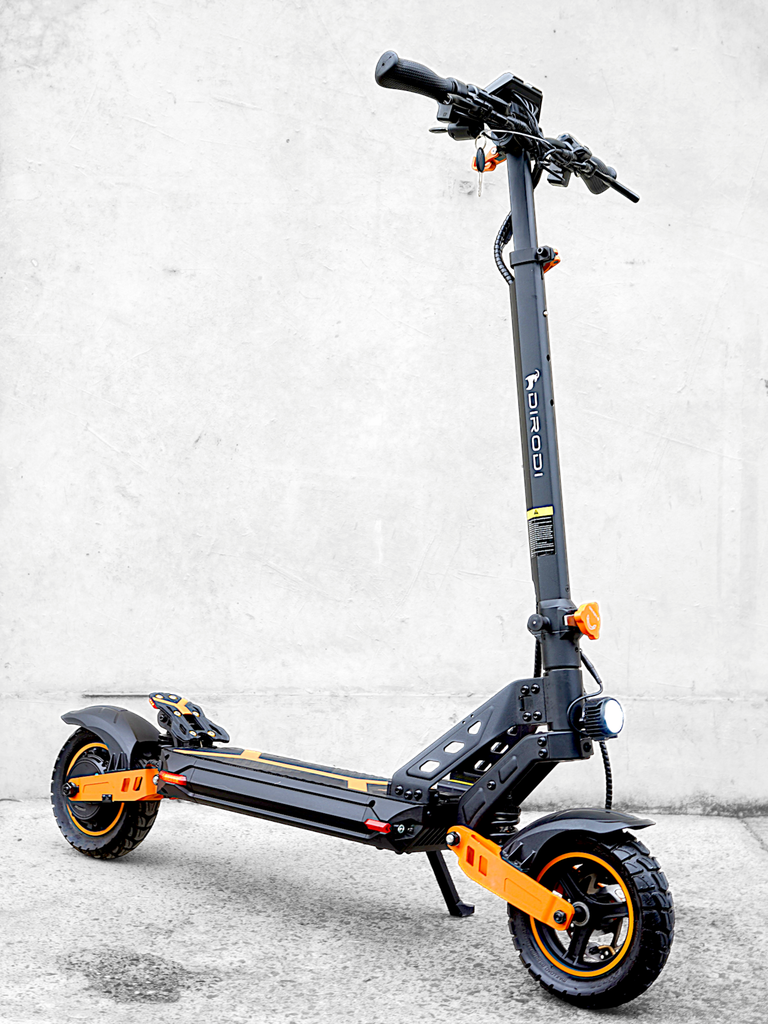
Portability is crucial when choosing an electric scooter, as you may need to carry or move it when not in use. Consider the weight of the scooter and whether it's manageable for you, keeping in mind factors like stairs, storage space, and transportation needs. Some e-scooters have extra wheels or a folding configuration that allow them to be rolled along. Even with such features, at some point the e-scooter might have to be lifted into a vehicle or carried upstairs.
If you are looking for recreational joyriding or extreme off-roading and not focused on your e-scooter's portability, the weight is not as important as top speed and build quality. But if you are looking for an electric scooter for commuting to and from work on a daily basis, the scooter you choose must be lightweight enough and easy to transport. On the other hand, lightweight scooters don't perform well in rougher terrain conditions, and it is necessary to have a strong frame and a powerful motor to be able to reach higher speeds. If your scooter is too slow, you could be at risk of colliding with other vehicles on the road. Considering these factors, making sure the scooter's weight is suitable for your convenience is paramount.
4. Top Speed
For most commuters, a scooter with a top speed of 25 km/h is sufficient, and many areas restrict speeds to this limit for safety reasons, especially on pedestrian sidewalks. Although 25km/h may seem slow compared to cars, it feels faster on a scooter due to the smaller tires and rapid acceleration. Remember, using proper safety gear is essential, and a helmet is crucial at any speed to ensure a safer riding experience.
Important Note
Public-use rules differ by state. Check whether private scooters are permitted, whether the exact model meets device limits and whether the rider meets the local requirements. Our scooter rules guide links to government sources.
5. Rider Weight
Electric scooters have a specified maximum rider weight limit, typically ranging from 100 kg to 150 kg, which is crucial to follow for safety and scooter longevity. If you weigh more than this recommended range, it’s important to look specifically for scooters designed to support higher weight. Exceeding the manufacturer’s weight limit can not only lead to potential safety hazards but may also void your warranty, leaving you without coverage for potential issues.
Even if you fall within the weight limit but are close to the maximum capacity, it can still impact the scooter’s performance. Heavier riders often experience reduced speed and range compared to lighter riders, as the motor and battery work harder to maintain pace. This added strain on essential components, such as the motor, battery, and structural frame, may cause premature wear, reducing the scooter’s overall lifespan.
Include your clothing and carried items when checking the scooter's load limit. Ask to try starts and braking with an appropriate load. Rider weight alone is not a reason to select a particular motor wattage or ignore local device limits.
6. Deck
Stand on the scooter in your usual footwear and check the usable deck space. Make sure the stem, folding mechanism and rear wheel area leave enough room for a controlled stance.
Try reaching the controls without stretching. Check the grip surface, edges and the maker's stance instructions. A larger deck may offer more room but also affect carrying and storage.
7. Motor Power
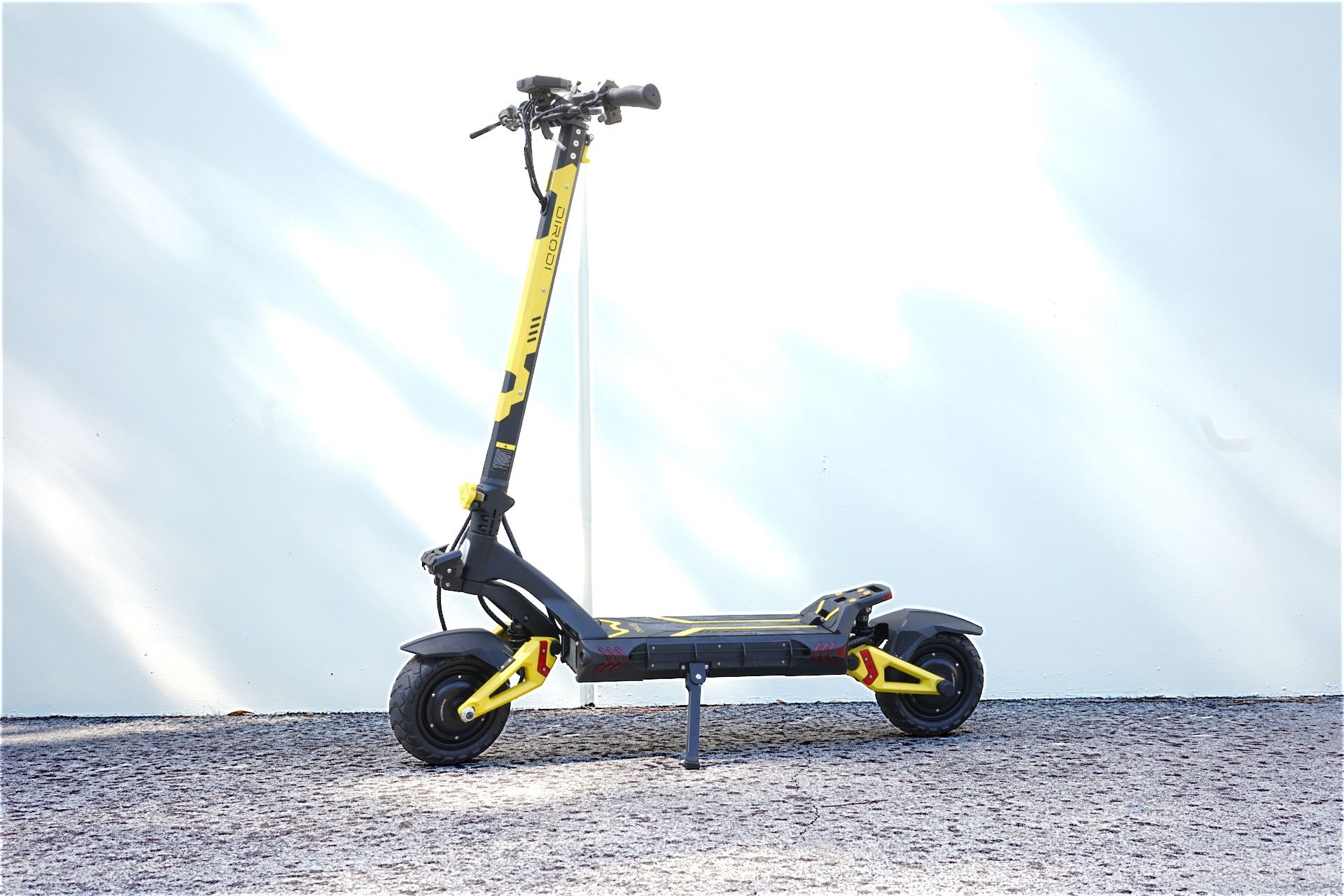
Scooters may use one motor or two, but a bigger motor is not automatically the right choice. Compare the exact device's permitted use, handling, brakes, weight and support. High-performance private-land models can have very different requirements from a public-use scooter.
For a hilly route, ask how the scooter is designed to perform with your load. Check the stated limits and try a suitable incline where permitted. Do not assume a wattage figure guarantees hill performance, stability or public-road eligibility.
8. Suspension
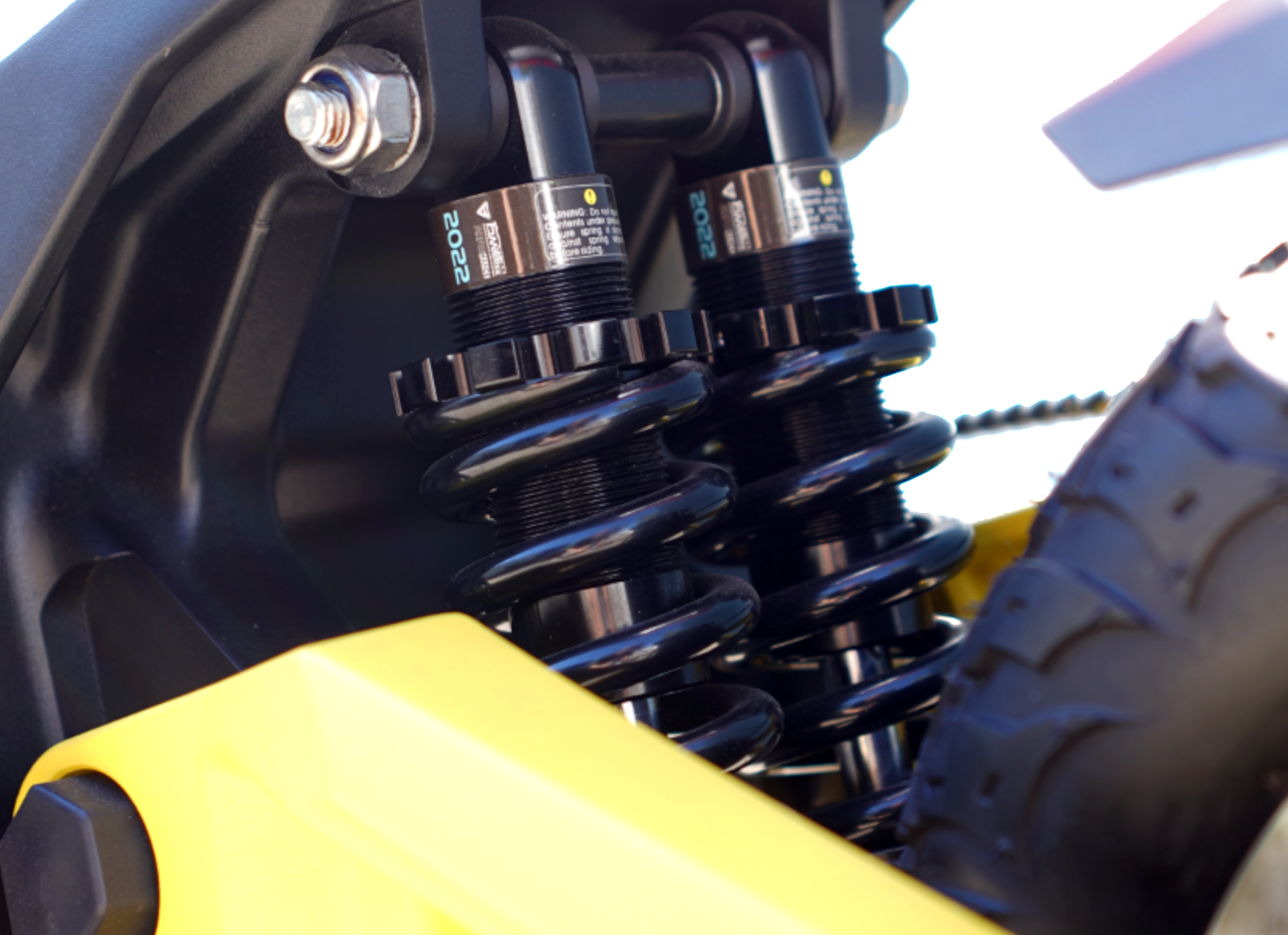
Suspension systems in electric scooters work similarly to car suspensions, smoothing out road bumps to improve ride comfort. Without suspension, particularly with solid tires, riders feel every bump and road indentation, making a suspension system essential for those traveling over rough terrain.
There are three main types of scooter suspension: spring, hydraulic or air piston, and rubber. High-end scooters often combine spring and piston systems, creating a “coil-over-hydraulic” or “coil-over-air” suspension. Spring suspension, the simplest type, uses a coil spring to absorb shocks and is commonly found on lightweight scooters. Although affordable, it offers less cushioning than other suspension types.
Hydraulic and air piston suspensions are pricier but provide greater cushioning and ride quality. Hydraulic suspensions utilize an oil-filled cylinder that compresses when riding over bumps, while air piston suspensions function similarly but use air pressure instead of oil for shock absorption. Rubber suspensions use elastomer components (rubber cartridges) instead of metal coils to absorb shocks and vibrations. Known for their stiffness, they can be customized by changing the rubber cartridges.
As micromobility technology advances, adjustable suspension systems are becoming more common. These systems allow riders to customize suspension settings based on terrain, ride quality, and personal preferences, enhancing both comfort and performance.
The type of suspension on a scooter generally aligns with its price. Basic models, offer limited suspension but can still soften rides. Premium scooters, especially those priced above $2,000, almost always feature some form of suspension on at least one wheel, often providing a smoother and more controlled experience.
Some manufacturers, however, are opting to forgo traditional suspension in favor of large pneumatic tires, which offer superior shock absorption compared to cheaper spring suspensions.
9. Lighting
Before riding an electric scooter at night, it's essential to ensure you have adequate lighting for visibility and safety. A standard setup includes a high-mounted white front light and a red rear light, but for extra visibility, you might consider adding stem and deck lights. Due to design limitations, many scooters lack prominent rear lights, so attaching flashing red lights to a helmet or backpack can greatly enhance safety.
As the electric scooter industry advances, more companies are incorporating innovative lighting features, such as award-winning headlights that are powerful enough to rival car lights and patented projector-beam tail lights that project a beam onto the rider, significantly improving rear visibility. These advancements indicate a shift toward making robust lighting a standard in the industry, increasing safety for all night-time riders.

10. Brakes
A robust braking system is crucial for electric scooter safety, as it helps maintain control while riding. Electric scooter brakes fall into two main types: mechanical and electronic.
Mechanical brakes operate with physical mechanisms to slow the scooter and include foot, drum, and disc brakes. These brakes generally stop a scooter traveling at 15 km/h within 6 feet, with the best systems halting under 10 feet.
Foot brakes, which require pressing the rear fender against the tire, offer decent stopping power but are less effective than drum or disc brakes. Drum brakes, enclosed within the wheel hub, are low-maintenance and perform consistently in wet conditions. Disc brakes provide the most stopping power and are lightweight, making them ideal for high-performance scooters and better-quality budget models. Disc and drum brakes are the most effective mechanical options.
On the other hand, electronic braking systems-comprising electric and regenerative brakes-utilize the motor for braking. While low-maintenance, these brakes are weak, requiring 9-12 metres to stop a scooter traveling at 25 km/h, making them unsuitable for quick stops alone.
For optimal safety, mechanical braking systems are stronger, though many scooters combine both mechanical and electronic brakes to improve reliability. We recommend scooters with at least two braking systems to ensure redundancy if one fails.
For a comparison of suspensions and other features between the best e-scooters in Australia, read our article on the best electric scooter for every kind of ride in Australia.
11. Tires
There are two main types of tires for electric scooters: solid (airless) tires and pneumatic (air-filled) tires. Solid tires, typically made of rubber or foam, offer the advantage of being maintenance-free and are puncture-resistant. However, they have notable drawbacks, such as poor traction and rough ride quality, making them less comfortable on uneven surfaces where riders can feel even minor road imperfections.
Pneumatic tires, on the other hand, provide a superior riding experience, particularly in challenging conditions or on uneven terrain. They come in two types: tube-filled and tubeless. Tube-filled pneumatic tires offer the benefit of replaceable inner tubes if punctured, while tubeless versions eliminate this inner layer. Although air-filled tires require more upkeep-such as regular pressure checks and potential puncture repairs-they ensure better traction and cushioning. Because of these advantages, pneumatic tires are generally recommended for a smoother ride, with the improved comfort becoming especially noticeable over bumpy roads, which would otherwise cause considerable vibration through solid tires.

In scooter design, manufacturers sometimes combine tire types for balance; for example, using a pneumatic tire in the front (for better shock absorption) and a solid tire in the back, where most weight is carried. This combination helps to minimize flats on the rear tire while enhancing overall ride quality. Budget-friendly scooters often have solid tires due to their lower cost and minimal maintenance requirements, while mid- to high-range scooters typically feature pneumatic tires for added comfort.
Wheel size also affects scooter performance and portability. Small wheels (6 inches) are common on kids’ scooters, while entry-level models often have wheels around 8.5 inches, a size balancing portability with stability. Larger wheels (10 inches or more) are better suited for performance, as they offer enhanced handling, obstacle clearance, and are suitable for off-road conditions. However, smaller wheels are ideal for riders prioritizing portability. Generally, 8.5-9 inch wheels offer a good mix of convenience and stability, whereas larger wheels are preferred for optimal performance.
12. IP Rating
When choosing an electric scooter for all-weather use, it’s essential to understand the IP rating. This rating has two numbers that show the scooter’s resistance to dust and water: the first number indicates dust protection, and the second shows water resistance. A higher rating means better protection. If you plan to ride in varying conditions, aim for a scooter with at least an IPx4 rating.
13. Warranty and Customer Support
A warranty is essential for addressing any issues that might arise with your electric scooter over time. Many companies offer limited warranties, so it’s important to read the fine print to know what’s covered before purchasing. Additionally, good customer support is a valuable asset when buying an electric scooter, as you may need guidance on maintenance and repairs. Since not all distributors offer strong post-purchase support, it’s worth considering the level of assistance provided by different brands to make an informed decision. Read more in our article on the best scooter brands to find the right one for you.
14. Repairs and Maintenance
When choosing an electric scooter, prioritize reliability and accessibility of parts to simplify maintenance. Research customer feedback on a brand's product quality and responsiveness in providing replacements. Durable materials like aluminum alloy or stainless steel are preferable, as they offer strength and longevity without excessive weight. Avoid scooters with numerous plastic parts, as they’re more prone to damage from falls, potentially leading to costly repairs. Ensuring these features will help you invest in a scooter that minimizes maintenance hassles and maximizes durability.
Regular tune-ups can prevent future issues with your electric scooter. While most parts require minimal maintenance, periodic checks on tires, bolts, nuts, and screws are essential. Ensure tire pressure and tread depth are adequate, and inspect for worn or damaged parts that may need replacement. Additionally, examine wires and cables for any signs of wear or damage.
15. Safety
Scooters and mopeds have become increasingly popular through shared services worldwide, but they’re also causing a rise in serious injuries and fatalities, especially among inexperienced riders. Shared scooter services often don’t provide helmets, leading to more head injuries in accidents, which could be significantly reduced by wearing protective gear. Reports show that more than 80% of these accidents could have been prevented with better riding technique and proper safety equipment, like helmets, elbow and knee pads, gloves, and visibility vests.
To stay safe, riders should practice on scooters before venturing out, wear appropriate gear, and stay alert to hazards such as uneven terrain or potholes. Understanding how to brake effectively and anticipating obstacles helps riders maintain control, especially in unexpected situations. Planning routes in advance also prepares riders for navigating turns and intersections safely. By prioritizing preparation, awareness, and proper gear, scooter riders can reduce their risk of accidents significantly.
How to Choose an Electric Scooter in Australia